Export heat detection resource

Heat Alarms for Commercial Kitchens: Evidence Guide | Wanlin

Review WANLIN-340 standalone heat detector selection for commercial kitchens and evidence decisions, including verified manual data, installation limits and.

Direct answer

What is a standalone heat detector?

A standalone heat detector monitors temperature and provides a local audible and visual warning when its defined alarm condition is reached, without requiring a conventional fire alarm control panel. It should be selected where the fire strategy and normal environment support heat detection.

For Fire Alarm Product Selection Guide, begin with the expected normal temperature, nuisance conditions and the fire scenario rather than selecting by radio name alone.

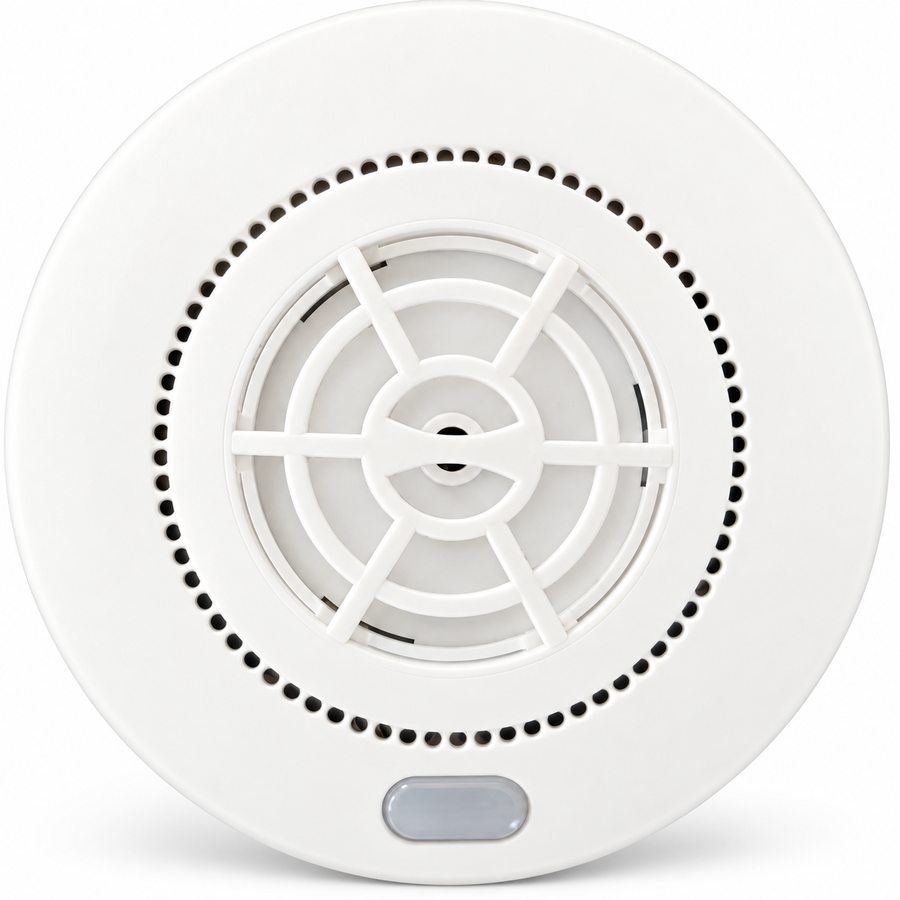
WANLIN-340 standalone heat detector

Documented model

WANLIN-340: verify the configuration before ordering

The supplied Ver 1.0 manual documents a WANLIN-340 temperature-sensing alarm and describes an NB-IoT reporting module. This does not prove that every WANLIN-340 SKU contains the same radio, platform or evidence scope.

Read the WANLIN-340 user manual · Review the evidence center

Verified manual data

WANLIN-340 documented configuration

Evidence scope: User manual Ver 1.0. Values apply to the documented configuration only. The listed standards are manual statements, not third-party certification claims.

Parameters transcribed from the WANLIN-340 user manual
Detection principleTemperature sensing with MCU processing
Detector classificationClass AS; point-type, fixed-temperature alarm in type-test report Dz2023201944
Rated working voltageDC 3 V
Battery capacity2400 mAh
Standby current≤ 6 μA
Alarm current≤ 100 mA
Sound pressure45-75 dB at 3 m directly in front, as stated in the manual
Operating temperature0 °C to +55 °C
Relative humidity≤ 95% RH at 40 °C ± 2 °C
Alarm outputAudible and visual alarm
Low-voltage thresholdBelow 2.7 V
Normal indicator intervalAbout 50 s
Low-battery chirp interval50 s ± 1 s
Silence periodAbout 80 s
Dimensions100 mm diameter × 47.3 mm
Approximate weight140 g including battery
Manual-listed execution standardGB 30122-2013
Installation referenceGB 50116-2013; project design requirements govern final layout

Model-matched test evidence

What does type-test report Dz2023201944 support?

Identity and scope

Shenyang Fire Research Institute, Ministry of Emergency Management issued a type test report (not a product certification certificate) for model WANLIN-340. The report lists 14 samples and a test period of 2023-09-26 to 2023-12-04.

Test basis and conclusion

The stated basis is GB 30122-2013 and GB 12978-2003 inspection rules. The report concludes: All applicable GB 30122-2013 items tested in the report were judged compliant.

Measured results

Two action-temperature results shown are 58.5 °C and 58.3 °C. Initial sound-pressure results for 14 samples range from 70.5 to 72.5 dB. These are report measurements, not guaranteed values for every production unit.

Evidence boundary: the report is dated 2023-12-07 and identifies a Class AS, point-type fixed-temperature alarm. It does not by itself prove that every radio or cloud variant has identical construction, nor does it constitute destination-market approval.

Marketing-material reconciliation: a supplied promotional image states an alarm-action upper limit of 65 °C. That is kept separate from the report's measured sample results of 58.3-58.5 °C and from the manual's operating-temperature range of 0-55 °C.

Where does the manual suggest heat detection?

Challenging smoke environments

The manual lists places with dust, retained smoke or vapour, and rooms where smoke detection may be unsuitable. A project review must still confirm detector type and environmental limits.

Potential non-smouldering fires

The manual identifies locations where a fire may develop without an early smoke signature. The project fire strategy should define whether fixed-temperature, rate-of-rise or another method is required.

Application review

Kitchens, boiler rooms, generator rooms and drying workshops are examples in the manual. Local design rules, spacing and commissioning requirements remain controlling.

This resource is written for fire safety distributors. It separates the documented detector behaviour from project design and destination-market acceptance.

Export specification checklist

  1. Destination country and applicable requirements
  2. Exact WANLIN-340 SKU/BOM and sensing behaviour
  3. Normal and abnormal ambient conditions
  4. Local-only or remote reporting architecture
  5. Power, label, manual and packaging language
  6. Model-matched certificate or test evidence

Answers for buyers

Standalone heat detector questions

What happens when the documented alarm enters silence mode?

The manual states that sound stops and the red indicator flashes rapidly for about 80 seconds, after which the alarm can resume if the threshold condition remains.

Is a manual-listed standard the same as certification?

No. The manual states an execution standard, but certification status must be supported by separate current evidence matching the exact model and legal holder.

What should an importer provide for a heat detector enquiry?

Provide the country, application, ambient conditions, ceiling height, quantity, local-only or remote reporting requirement, packaging language and required evidence.

Does the manual prove export certification?

No. A product manual records operating and installation information; it is not a third-party certificate and does not establish destination-market acceptance.

Can one WANLIN-340 specification cover every radio version?

No. Communication module, platform, label, power arrangement and evidence can vary. Confirm the controlled configuration before quotation or a formal claim.
Request a model-specific heat detector review

Send the country, application, ambient conditions, quantity, reporting method and evidence requirements to wanlinfirecontrol@163.com.

Last reviewed: 2026-11-02. No local office is claimed; Wanlin Fire manufactures in Shenzhen, China and supports export enquiries.